English
 Español
 عربى
عربى
 русский
 Français

On a commercial retrofit, the cold-water supply line had a failed ball valve that was buried behind a new wall. There was no room to cut the pipe back and thread a new fitting. In that exact situation, a slip ball valve looks like the perfect answer: it slips over the pipe end, and the connection locks without a torch, thread sealant, or a pipe wrench.
But if you have room to work and the line is rated for normal service pressure, a standard threaded, press, or PEX ball valve is the better choice. The slip connection is a convenience feature, not an upgrade to the valve's rated performance. That distinction shapes every decision from the supply room to the final pressure test.
Ball Valve vs Slip Ball Valve: The Difference Is the Connection
Both types use the same basic quarter-turn ball mechanism. The ball has a bore through the center, and rotating the handle 90 degrees either aligns the bore with the flow path or blocks it. That part of the design is not where the difference lives.
The difference is the end connection. A slip ball valve is a push-to-connect device. It has a collet, an O-ring, and a release collar. You push the pipe into the fitting until it bottoms out, and the collet locks against the pipe. The seal is made by a rubber O-ring, not by metal thread engagement or a solder joint.
A standard brass or bronze ball valve ends in a more traditional connection: female or male threads, a sweat end for copper, a press end, or a PEX connection. These joints are mechanical or metallurgical, and they are designed to hold pressure under the same operating conditions as the pipe itself. Brass ball valves have been the core of modern water systems because they combine a simple shutoff with reliable pressure-containing end connections.
For a typical threaded installation, a forged brass ball valve with a level handle and a full port gives you the most predictable service life.
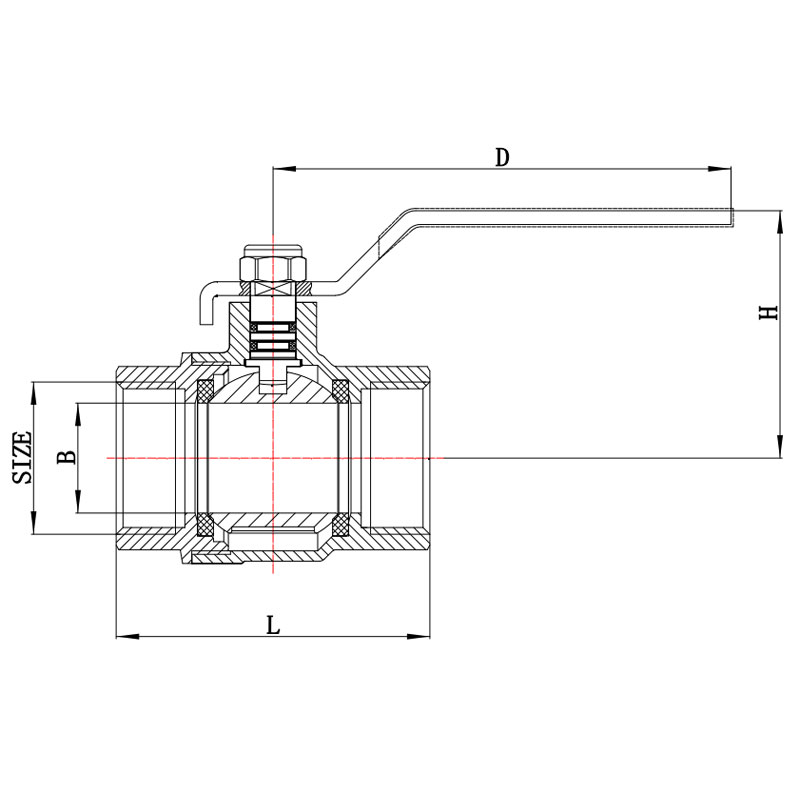 Forged Brass Threaded Ball Valve with Lever Handle This full-port brass ball valve with female threads and a lever handle is a reliable choice for typical threaded installations, offering durable construction and leak-resistant sealing for water, gas, and air systems. View Product →
 Side-by-Side Comparison
The table below uses the criteria that matter most on a real installation.
| Factor | Slip Ball Valve | Standard Brass/Bronze Ball Valve |
|---|---|---|
| End connection | Push pipe into fitting; O-ring and collet hold the pipe | Thread, sweat, press, or PEX joint |
| Installation speed | Very fast if pipe is clean and accessible | Moderate to slow; threading, pressing, soldering, or crimping takes time |
| Pressure and temperature rating | Generally rated for cold or low-pressure water; not for steam or high-pressure industrial lines | Designed for a range of WOG and hydronic pressures; rating depends on body and end connection |
| Repairability | The joint is hidden inside the fitting; a damaged O-ring usually means cutting the valve out | Threaded connections can be re-sealed; press and solder joints are more permanent but still replaceable |
| Best fit | Repair jobs where the pipe cannot move, and low-pressure temporary or light commercial shutoffs | New construction, water meters, hydronic systems, plant piping, and long-term service |
Pressure and Temperature: The Most Important Difference
The slip connection has one weak point: the O-ring. O-rings are excellent seals at moderate temperature and pressure, but they are not a substitute for a metal seal that is backed by thread engagement or a welded joint. Slip fittings are commonly rated for cold water. When the water heats up, the rubber can soften and lose its grip, and the collet can lose its bite over many thermal cycles.
A standard threaded or press ball valve has no such single point of failure. The metal-to-metal contact of a thread or the compression of a press sleeve is a mechanical connection that carries the load independent of any elastomer. For hydronic loops, boiler drains, outdoor water lines, or any line where pressure peaks can exceed the slip rating, this is a decisive factor.
If the water is hard or contains debris, the O-ring can also be damaged during insertion. The slip design requires a clean, burr-free pipe end. A standard thread or PEX connection is more forgiving in a construction environment.
Material and Surface Finish
Most standard ball valves for water service are made from brass or bronze. The body can be forged for strength or cast for complex shapes. Nickel plating is a common finish because it resists tarnish and makes the valve easier to clean. It also improves the visual appearance when the valve is exposed in a mechanical room or an exposed utility area.
For a valve that will remain visible, a nickel-plated brass full-port ball valve keeps the quarter-turn mechanism reliable and the finish clean.
 Nickel-Plated Brass Full-Port Ball Valve With its nickel-plated exterior and full-port design, this valve provides enhanced corrosion resistance and reliable quarter-turn operation, making it well-suited for visible installations where a clean finish matters. View Product →
 Maintenance and Repairability
Ball valves rarely need maintenance beyond periodic operation. A small amount of scale or mineral build-up on the ball can make the handle hard to turn. With a standard threaded valve, you can usually loosen the end cap, clean the ball and seats, and reassemble. If you need to replace the valve, the threaded connection can be undone.
With a slip ball valve, the fitting is not serviceable in the same way. The O-ring and collet are inside the fitting, and the valve is not designed to be disassembled in place. If the O-ring fails, you have to cut the pipe, which is exactly what the slip valve was meant to avoid.
Cost and Total Installation Time
The slip valve can be cheaper to install in a repair because it saves labor. In a new installation, the time cost is different. You still need to measure, cut, and deburr the pipe. You have to push the pipe fully into the fitting, and you have to test the joint. A slip valve may be faster to connect, but it may require a special tool or additional support if the pipe is not perfectly straight. For a project with dozens of valves, a standard threaded or press connection is often more consistent.
The material cost of a slip-specific valve is also often higher than a standard brass valve of the same nominal size. The price reflects the convenience, not an upgrade in pressure rating.
When a Slip Valve Makes Sense
There are jobs where slip is the only workable option. If a pipe is in a wall cavity and cannot be moved, a slip connection lets you install a shutoff without cutting a long section out. The same thing applies to a valve that sits at the end of a long, rigid run where the pipe cannot be rotated.
For low-pressure irrigation, temporary bypass lines, and light-duty shutoffs, a slip ball valve is acceptable. The key is to keep the pressure and temperature application within the published rating, and to use it in a location where it is easy to access in the future.
When a Standard Brass Ball Valve Is the Right Call
If any of these conditions are present, choose a standard connection:
- The line carries more than the slip fitting's published pressure rating, or the temperature can exceed 180 F.
- The valve will be buried, concealed, or installed in a ceiling where access is difficult.
- The system is a hydronic loop or a boiler drain that cycles between hot and cold.
- The valve is on a water meter or a branch that the owner expects to last for years without service.
For PEX supply lines, PEX ball valves are a straightforward choice because they use the same crimp ring system as the rest of the installation.
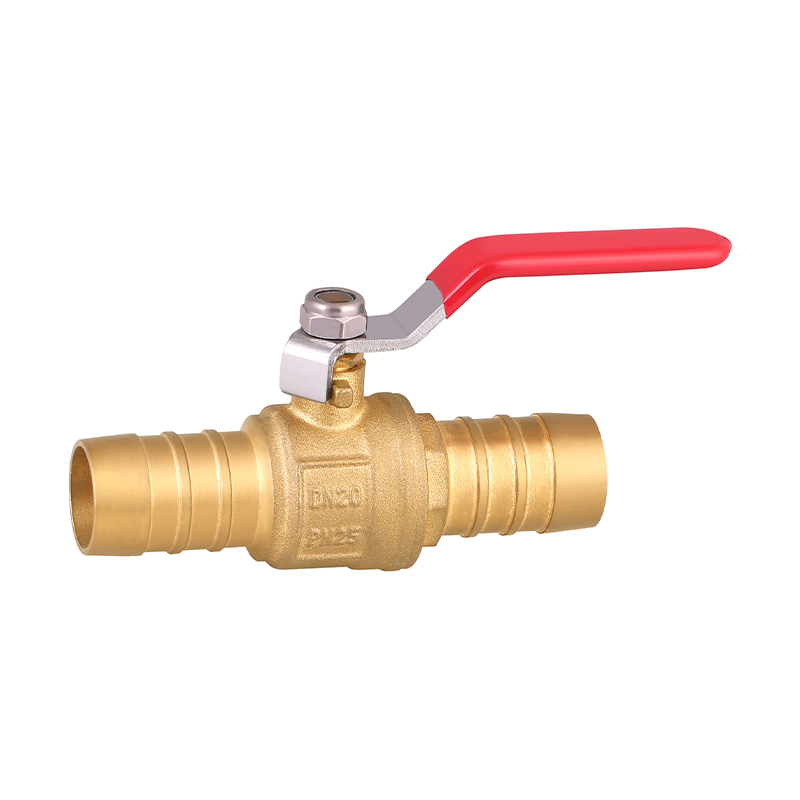 Brass PEX Ball Valve for Crimp Connections Designed for PEX supply lines, this brass ball valve uses the same crimp ring system as the rest of the installation, ensuring a consistent and dependable connection for plumbing and heating systems. View Product →
 The Bottom Line
Ball valve vs slip ball valve is not a contest between two different balls. It is a decision about whether to choose a convenient repair fitting or a system-rated connection. If you are installing a new shutoff, replacing a water meter valve, or building a hydronic loop, choose a standard threaded, press, or PEX ball valve. If the pipe cannot be moved and the line is low pressure, a slip ball valve can get you out of a tight spot, but it should not be the default valve for a durable installation.